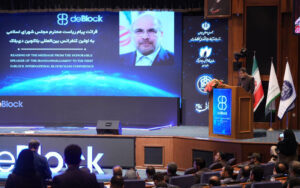
Tehran – June 2025 – The deBlock International Conference, the first academic event in blockchain and cryptocurrency in Iran, will be held on June 15-16, 2025. This announcement was made during a press conference on Sunday, June 1, attended by senior officials from the Ministry of Communications, the Computer Trade Organization, and representatives from the private sector and banking industry.
Deputy Minister: Blockchain is Key to the Future of Digital Economy
Ehsan Chitsaz, Deputy Minister of Communications and Information Technology, emphasized the pivotal role of blockchain in digital transformation: “Blockchain is what connects all technologies together and brings trust to communities.”
He added that this technology goes beyond being just a ledger and is creating fundamental changes in various services, including healthcare. Chitsaz also pointed to challenges in developing this technology, including scalability, energy consumption, and organizational adoption barriers.
“If blockchain is to create a sustainable revolution in our lives, it must serve the people,” Chitsaz stressed, expressing hope that this conference would contribute to achieving the goals of the Seventh Development Plan and 10% economic growth.
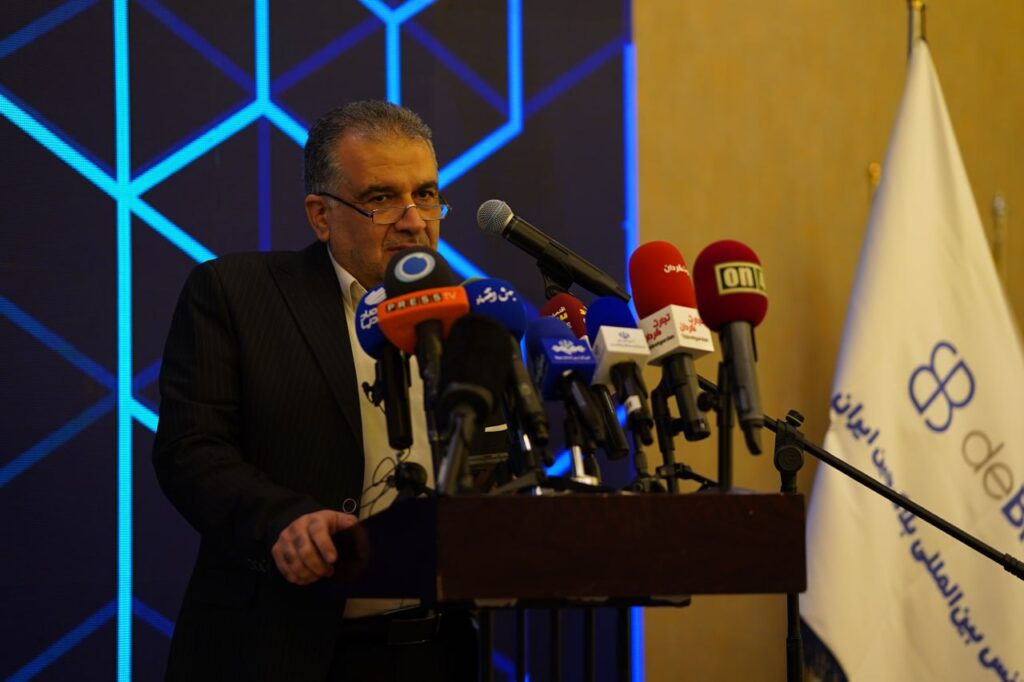
Full Support from Computer Trade Organization
Asghar Rezanejad, representative of the Computer Trade Organization, announced their full support for the conference. He said: “The Computer Trade Organization considers supporting emerging aspects of the digital economy as one of its duties.”
Predicting $76 Trillion Increase in Global GDP
Pouria Astaraki, founder and president of the deBlock Conference, presented significant statistics on the economic potential of cryptocurrencies. He announced that in the next five years, a $76 trillion increase in global GDP is predicted due to the widespread adoption of cryptocurrencies.
Astaraki also referred to structural issues: “Cross-border transactions are reaching one trillion dollars while 1.5 billion people are excluded from financial services.”
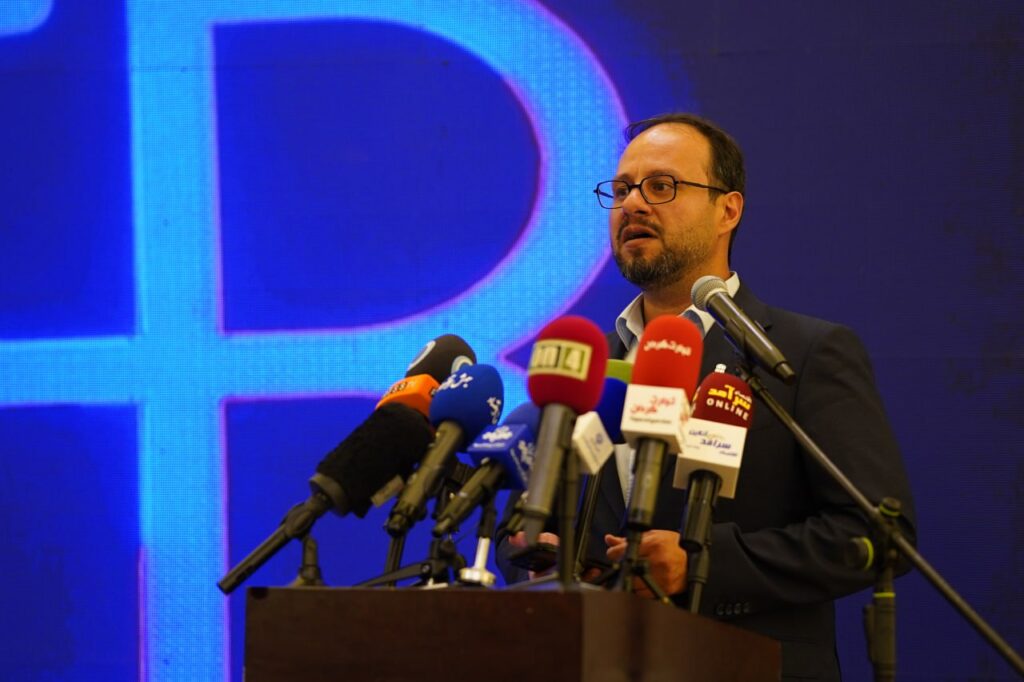
“deBlock ” Means Removing Barriers to Financial Transactions
Abbas Ashtiani, co-founder and secretary of the conference, explained the meaning behind the conference name: “deBlock in English means removing barriers.” He added that the main goal of the conference is to identify and remove financial and regulatory obstacles to cryptocurrency usability.
Ashtiani also predicted that by 2030, at least $160 trillion of global GDP will be attributed to blockchain technology. Citing Satoshi Nakamoto, he emphasized: “To utilize this technology, enough people need to be thinking about this issue.”
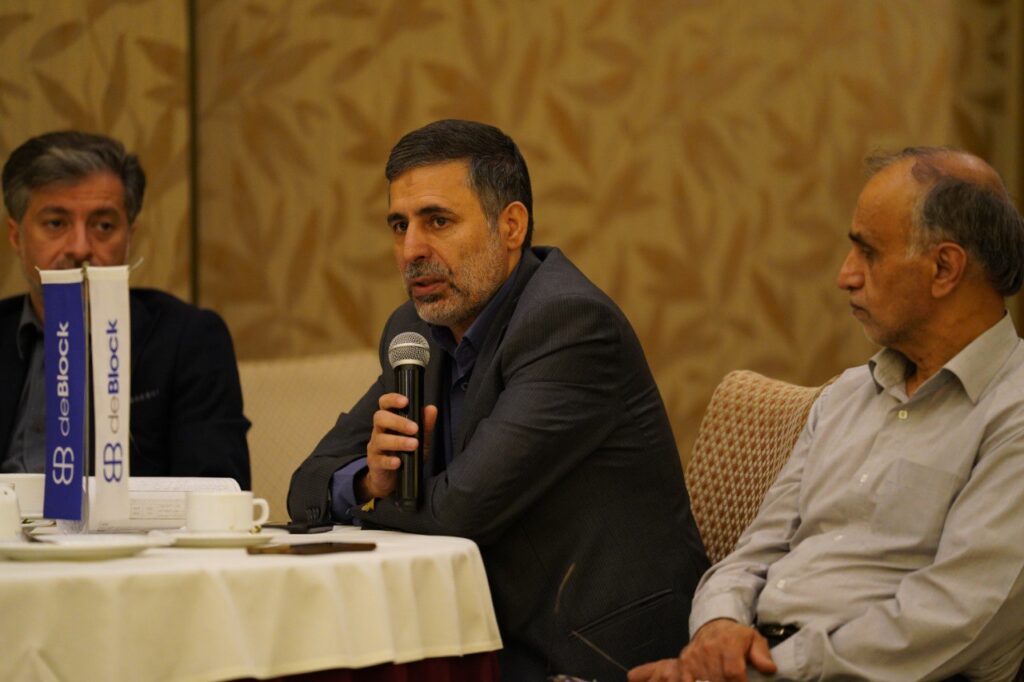
Allameh Tabatabai University Collaboration and 35-Member Scientific Committee
Mohammad Amin Zarei, the conference’s scientific secretary, announced the collaboration with Allameh Tabatabai University as the scientific arm of the event. A 35-member scientific committee has been formed with prominent professors from the faculties of law, political science, mathematics, management, and economics.
Statistics on Received Papers:
- 107 papers received from across the country and internationally
- 15-20 percent of papers from foreign countries
- 86 papers received conditional acceptance
- 75 papers predicted for final acceptance
- 20 papers to be selected as top papers
Top Paper Awards:
First Place: 1.5 Ethereum (equivalent to 300 million Tomans)
Second Place: 0.75 Ethereum (equivalent to 150 million Tomans)
Third to Fifth Places: 0.25 Ethereum (equivalent to 50 million Tomans)
RighTel: Blockchain is a Transformative Infrastructure
Kamil Shahhosseini, Technical Development Director at RighTel, announced this operator’s support for the conference. He said: “We see blockchain as a transformative infrastructure, not just a technology.”
Shahhosseini referred to Gartner’s Hype Cycle and explained: “Blockchain is currently on its downward slope, but this is the point where serious players should enter and take it from the trough of disillusionment to the plateau of productivity.”
Blockchain Association: Iran Should Play a Role in BRICS
Mohammad Sharghi, CEO of the Blockchain Association, highlighted the geopolitical importance of blockchain technology: “Russia conducts over 70% of its transactions directly with other countries through barter systems.”
He emphasized that Iran, as an observer member of BRICS, can be a significant player in this field and added: “With the infrastructure and expert community existing in Iran, our country can be one of the important players.”
Sharghi also referred to regional activities: “Saudi Arabia has entered the housing and real estate sector, and in the UAE, we are witnessing strong launch pads with new projects being defined every day.”
Shahr Bank: Real Estate Tokenization for Financial Inclusion
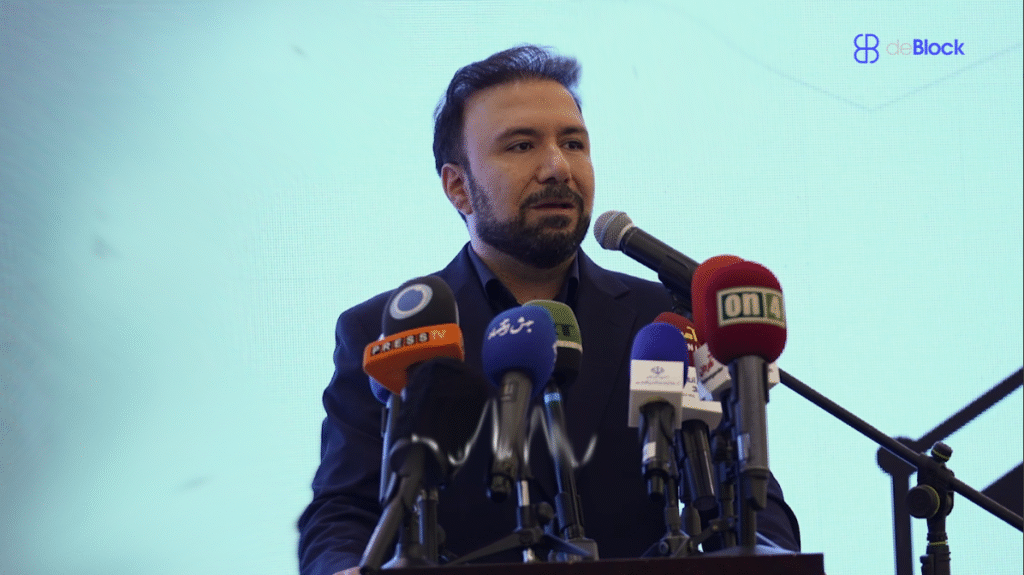
Mohammad Tehrani, professor at Khatam University and representative of Shahr Bank, announced this bank’s entry into the blockchain field. He said: “Shahr Bank’s focus is on tokenizing real assets, especially real estate tokenization.”
Tehrani explained: “The goal is to establish fractional or metric real estate sales on Shahr Bank’s infrastructure.”
He emphasized the importance of financial inclusion: “Real estate assets require large investments due to their high entry threshold. This entry can lead to expanded financial inclusion, especially for medium and small investors.”
Practical Applications in Livestock, Environment, and Housing
Sharghi reported on practical projects: “In Iran, there are capacities, businesses, and startups with innovative ideas. Currently, projects in livestock, environment, and housing sectors are being implemented.”
Regulatory Challenge: The Increased Importance of “deBlock “
Sharghi identified regulation as the biggest challenge: “The biggest obstacle or challenge ahead is regulation, which makes the name deBlock even more important as it can act as a breakthrough and opener of these borders.”
Slogan: “The Future of BRICS with Blockchain”
This conference is being held under the slogan “The Future of BRICS with Blockchain” with the aim of connecting businesses, governments, and universities to develop knowledge and solve legal challenges in this field.
Iran’s Challenges in Cryptocurrency
Astaraki pointed to Iran’s current situation in this field: “In our country, only cryptocurrency mining and exchange have been given attention, while 82% of the value created in the blockchain space has been ignored.”
About deBlock 2025 Conference:
- Dates: June 15-16, 2025
- Topic: Blockchain, cryptocurrencies, and digital economy
- Feature: First international academic conference in this field in Iran
- Scientific tracks: Economic-financial, business, regulatory, technology
- Supporters: Ministry of Communications, Computer Trade Organization, RighTel, Shahr Bank, Blockchain Association
- Academic partner: Allameh Tabatabai University
Economic Forecasts:
- $76 trillion increase in global GDP in the next 5 years
- $160 trillion attributed to blockchain by 2030
- One trillion dollars in cross-border transaction value
Part Two: Q&A Session of deBlock 2025 Conference Press Briefing: Regulatory Challenges and Blockchain Diplomacy
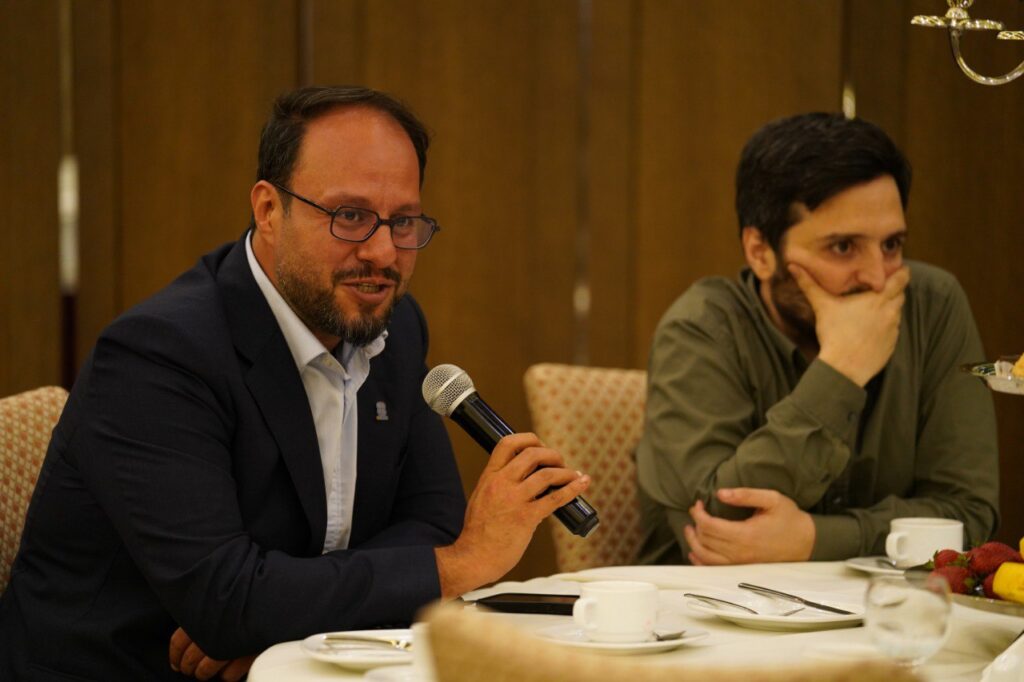
deBlock Conference Press Office | June 1, 2025 – Following a short break, the second part of the deBlock International Conference press briefing commenced with a Q&A session. Ehsan Chitsaz (Deputy Minister of Communications), Abbas Ashtiani and Pouria Astaraki (Conference Founders), and Mohammad Amin Zarei (Scientific Secretary) took the stage to answer questions from journalists and attendees.
Regulatory Challenges and Central Bank’s Role
The first question addressed the Central Bank of Iran’s approach to regulating international cryptocurrency exchanges and its position in the deBlock conference, given its previous opposition to cryptocurrencies.
Chitsaz emphasized in response: “The era of sectoral regulation is almost over.” He added: “The Central Bank is definitely part of the solution, but within a combination of capacities that includes the Securities and Exchange Organization, the private sector, and the Supreme Council of Cyberspace.”
The Deputy Minister noted: “We need all institutions to regulate the cryptocurrency ecosystem in the country and welcome a more prominent, effective, and constructive presence from the Central Bank.”
Beyond Technology: Interaction of Wills
A Peivast journalist highlighted the ineffectiveness of a purely technological approach in solving international exchange problems, asking how blockchain could address issues that extend beyond technology.
Ashtiani provided a comprehensive response: “It’s not just about technology, but also about wills and intentions.” Referring to similar challenges globally, he added: “The cryptocurrency and blockchain phenomenon is multi-faceted, interdisciplinary, and completely multi-disciplinary, and these challenges exist worldwide.”
The Conference Secretary emphasized the necessity for changes in regulatory approaches: “It is now almost established that the regulation of this field must be agile and variable, just as its nature is interdisciplinary and inter-institutional.”
Global Lessons: The Ripple Experience and Its Application in Iran
Javaherchin, Economic Editor of Soroush News, referenced the success of XRP (Ripple) digital currency in regional countries and asked why Iran isn’t utilizing this well-known technology.
Ashtiani pointed to domestic initiatives: “The Central Bank has various projects underway for designing non-banking settlement systems and the digital rial. The blockchain on which the digital Rial is designed is close to the Ripple project.”
He also highlighted the importance of risk management: “The reality is that utilizing intentions and reducing risk are of high importance. Countries’ risk appetite in the digital economy space is quite evident.”
Regulatory Coordination Challenges
A Nabz-e Fanavari reporter mentioned regulatory problems and inconsistencies in the country, asking whether positive changes could be expected in BRICS blockchain collaborations.
Astaraki candidly responded: “Blockchain and crypto assets emerged from society and now have approximately 15 to 20 million users in Iran.” He added: “The biggest problem is that at higher levels, negligence or lack of awareness has prevented the definition of a national program in this field.”
The Conference President expressed hope that the deBlock conference would raise national awareness at higher and academic levels.
Bridging Science and Legislation
Bahareh Sayyar from Zima News asked about the connection between the conference’s scientific aspect and legislation, as well as how to create unity among various government institutions.
Zarei, the Conference Scientific Secretary, responded: “One of the challenges of blockchain technology compared to other technologies is that in some countries it is recognized as an asset, and this similarity in lawmakers’ minds with money has caused a failure to distinguish between digital currency, cryptocurrency, and crypto assets.”
Referencing various applications of this technology, he explained: “The development of artificial intelligence without combining it with tools like the Internet of Things (IoT) and blockchain cannot create significant capacity for us.”
Zarei further addressed the natural resistance of institutions to innovation: “Innovation and technology are inherently disruptive. Innovation means introducing new things, and this introduction is not compatible with traditional methods.” He emphasized: “These resistances are observed not only in Iran but in all countries worldwide.”
Implementation Mechanism for Conference Outcomes
Sahel Akhtari, a cryptocurrency activist, asked about the mechanism for following up on proposals and outcomes from the conference and their impact on regulation.
Ashtiani referred to international developments: “The Speaker of the Islamic Consultative Assembly’s visit to the BRICS summit as the country’s representative indicates decreasing distances in international interactions.”
Highlighting the upcoming conference achievements, he said: “In the upcoming conference, Tehran will host ministers from different countries for the first time. The presence of ministers and ambassadors from various countries will lead to memoranda of understanding and joint statements.”
Widespread Coverage and International Presence
In the closing part of the meeting, Astaraki referred to extensive efforts to attract all stakeholders’ participation: “We have tried to genuinely invite everyone, and this invitation has not been merely ceremonial.” He added: “Our policy council has invited people from various spectrums, and very serious and substantive meetings have been held.”
Key Takeaways from the Q&A Session:
- End of sectoral regulation era and necessity for collaboration among different institutions
- Need for changes in regulatory approaches consistent with blockchain’s interdisciplinary nature
- Experience of 15 to 20 million Iranian users in cryptocurrencies
- Hosting ministers from different countries and concluding international agreements
- Utilizing blockchain diplomacy potential in BRICS collaborations
This report was prepared based on the press conference held on Sunday, June 1, 2025, attended by senior government officials, academics, and private sector representatives.